

Select Your Region

We noticed you visit this page from United States. Please select your preferred region to continue

skip to content

Country Selector

Based on your location

Europe

North America

Latin America

Asia-Pacific

Central Nervous System Inflammatory Disease

Inflammatory disease of the central nervous system comprises a large spectrum of autoimmune diseases. Multiple sclerosis is the most common chronic human inflammatory demyelinating disease of the central nervous system and causes of disability in young adults.

Published date: 3/8/2021 | Modified date: 6/4/2026

What is Multiple Sclerosis?

Multiple Sclerosis is characterized by the disseminated demyelination of nerve fibers of the brain and spinal cord and may lead to physical disability, cognitive impairment and decreased quality of life.

Usually, Multiple Sclerosis can progress with individual relapses (attacks or exacerbations) or more gradually.

Presence of intrathecal IgG suggests inflammatory disease of the Central Nervous System (CNS), such as caused by multiple sclerosis (MS).

Oligoclonal bands detection in CSF : the gold standard assay to objectively detect CNS local IgG synthesis.

Key figures

  • 20-40 years

    Common age of onset of Multiple Sclerosis

  • 2.9 million

    People affected by Multiple Sclerosis globally

  • 3.2 months

    Median time to diagnosis by using the 2017 Mc Donald criteria

How do we diagnose Central Nervous System Inflammatory Disease?

  • Item 1

    Many disorders of the central nervous system are associated with increased concentration of Cerebral Spinal Fluid (CSF) proteins either due to increased permeability of blood-CSF barrier or to synthesis of immunoglobulins, primarily IgG, within the Central Nervous System (CNS).Presence of intrathecal IgG synthesis suggests inflammatory disease of the CNS, such as caused by Multiple Sclerosis (MS).According to the updated international guidelines, these revised criteria will notably allow diagnosing MS in asymptomatic individuals specifically, those who previously were classified as having radiologically isolated syndrome (RIS). People with RIS have MRI lesions suggestive of MS, but no clinical symptoms. The latest recommendations emphasize that the detection of disease-specific oligoclonal bands in the cerebrospinal fluid can replace the need to demonstrate dissemination in time, allowing for a confirmed diagnosis even after a single clinical event in certain cases.

    Item 1

Knowledge & Science

No content available.

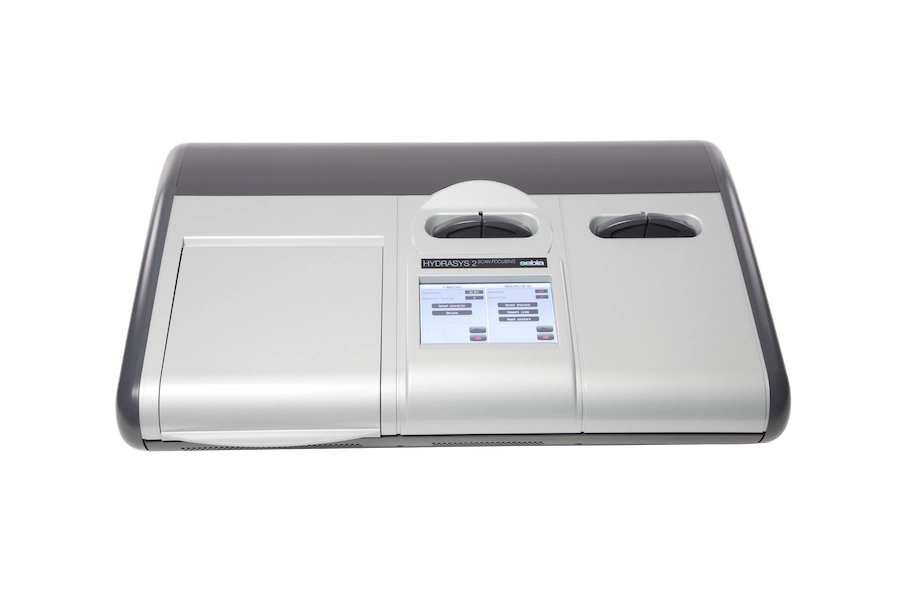
Instruments for diagnosing Central Nervous System Inflammatory Disease

a) Filippi M, Amato MP, Centonze D, Gallo P, Gasperini C, Inglese M, Patti F, Pozzilli C, Preziosa P, Trojano M. Early use of high-efficacy disease‑modifying therapies makes the difference in people with multiple sclerosis: an expert opinion. J Neurol. 2022 Oct;269(10):5382-5394. doi: 10.1007/s00415-022-11193-w. Epub 2022 May 24. Erratum in: J Neurol. 2022 Dec;269(12):6690-6691. doi: 10.1007/s00415-022-11385-4. PMID: 35608658; PMCID: PMC9489547.

This section contains information intended for wide distribution and may therefore contain product details or information that is not available or valid in your country.

Please contact your local Sebia representative. Information intended for healthcare professionals.
Carefully read the instructions in the reagent package inserts and instrument manuals.