Simple, secured and accurate CDT measurement
Normal clinical result : CDT IFCC ≤ 1.7% / Forensic positive result: CDT IFCC > 2%

Trusted biomarker for identifying chronic excessive alcohol consumption.

Chronic excessive alcohol consumption is a major public health concern, and early detection and monitoring are essential to improving patient outcomes and reducing alcohol‑related complications and healthcare costs. Carbohydrate‑Deficient Transferrin (CDT) is the IFCC‑recommended biomarker for reliably assessing chronic alcohol intake.
Sebia’s CAPI 3 CDT and MINICAP CDT assays quantify CDT in serum using capillary electrophoresis, a high‑resolution technique that separates transferrin isoforms according to their degree of sialylation. During analysis, transferrin is resolved into five principal fractions:
The CDT IFCC value (%) is automatically calculated based on the calibration curve of disialotransferrin. When CDT IFCC is not activated, a classic CDT (%) value is automatically computed using the low‑sialylated isoforms (disialotransferrin ± asialotransferrin, when present).
Interpretation is straightforward:

Normal clinical result : CDT IFCC ≤ 1.7% / Forensic positive result: CDT IFCC > 2%
Ready to use reagents, no sample pre-treatment and no need for additional total transferrin measurement.
Potential analytical and genetic interferences—such as transferrin variants, congenital disorders of glycosylation (CDG), or curve abnormalities seen in cirrhotic profiles—can be identified, helping prevent incorrect result reporting
CDT is available on MINICAP and CAPILLARYS family offering multiple configurations for streamlined workflow.
certification renewal
The CAPI 3 CDT and MINICAP CDT assays operate on the principle of free‑solution capillary electrophoresis. In this system, transferrin isoforms are separated within silica capillaries according to their electrophoretic mobility and the electroosmotic flow generated under high voltage in an alkaline buffer. Detection is performed directly during migration through ultraviolet absorbance.
All analytical steps are fully automated. Sample preparation, including dilution with a dedicated diluent that ensures complete iron saturation of transferrin, is carried out automatically by the system.
A serum sample is required to perform the CDT test. In forensic settings, serum provides clear advantages over matrices such as hair or urine, ensuring better sample integrity and analytical reliability while reducing the risk of tampering or fraud.
Throughput (tests/hour)*
CDT
Full traceability and positive ID for samples and reagents.
*Firmware-dependent; contact your local Sebia representative for current information.
**Maximum Capacity or MC designation refers to Tube Loader CAPILLARYS 3 - P/N: 1249 and Rack Conveyor CAPILLARYS 3 - P/N: 1250 associated with CAPILLARYS 3 TERA - P/N: 1246.
No content available.
Capillary Electrophoresis solution to meet your high capacity needs.
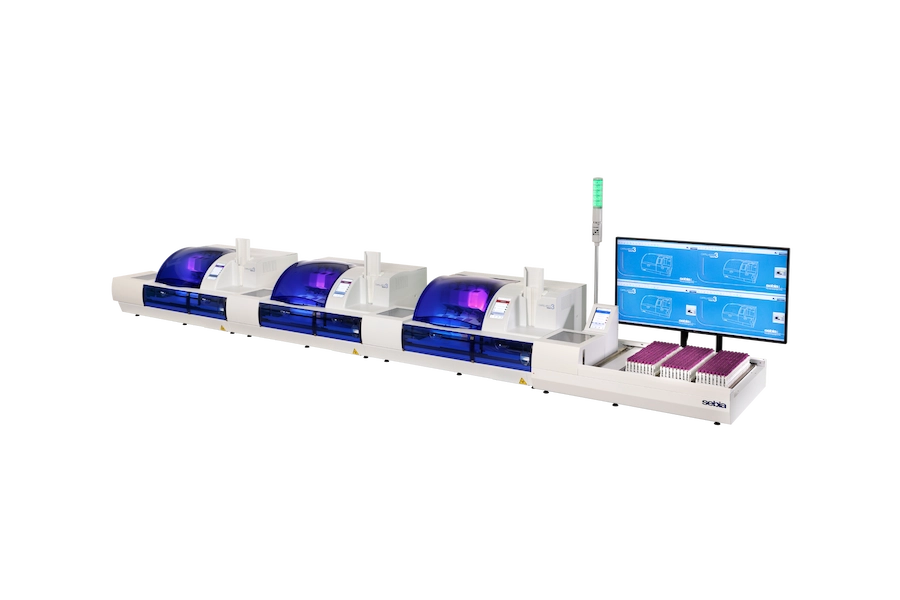
A concentrate of Sebia’s expertise in a high throughput instrument.
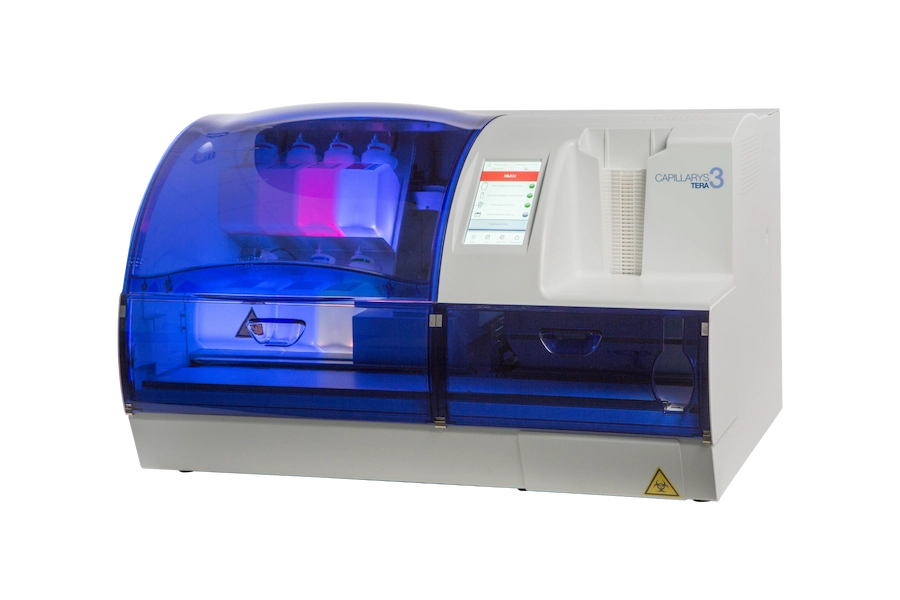
Evolution makes the difference.
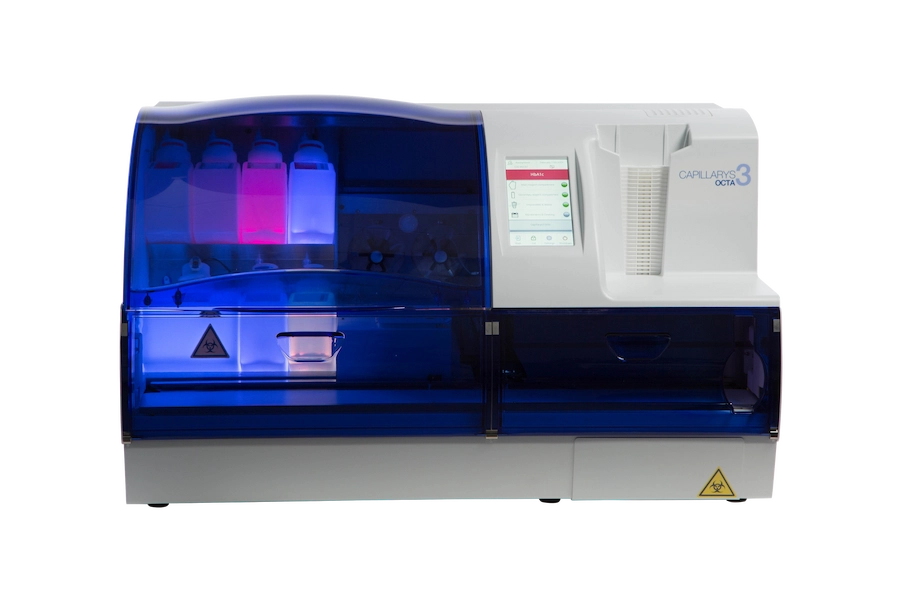
The compact and affordable automation of Capillary Electrophoresis.
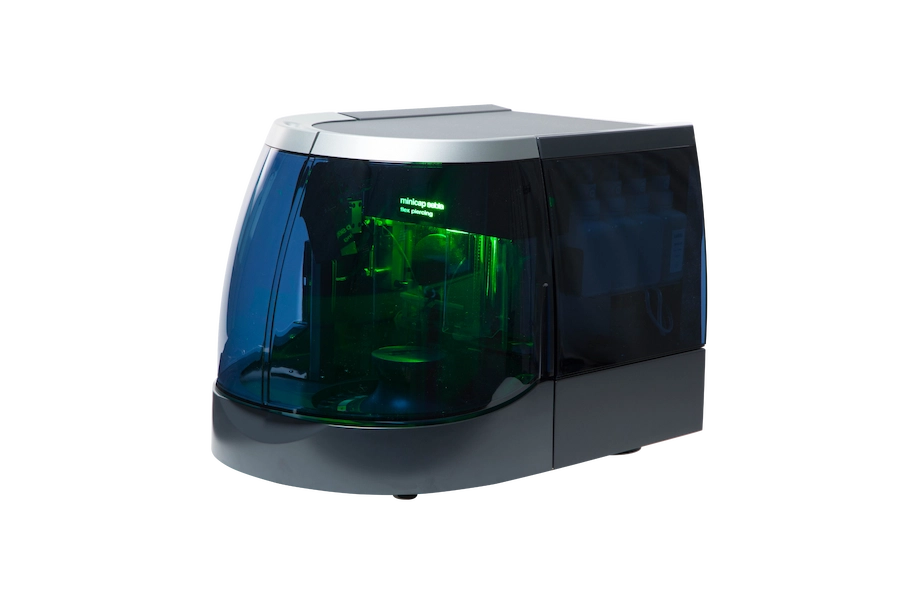
This section contains information intended for wide distribution and may therefore contain product details or information that is not available or valid in your country. Please contact your local Sebia representative. Information intended for healthcare professionals. Carefully read the instructions in the reagent package inserts and instrument manuals.