

Select Your Region

We noticed you visit this page from United States. Please select your preferred region to continue

skip to content

Country Selector

Based on your location

Europe

North America

Latin America

Asia-Pacific

Celiac Disease

Unmasking celiac disease, empowering health.

Celiac disease is a chronic autoimmune disorder triggered by the ingestion of gluten, a protein found in wheat, barley, and rye. In affected individuals, gluten causes an immune response that damages the lining of the small intestine. This damage impairs nutrient absorption, leading to symptoms such as diarrhea, bloating, weight loss, and fatigue. Celiac disease can also present with non-gastrointestinal symptoms, including anemia, skin rashes, and neurological issues. Diagnosis is based on serological tests for specific antibodies and confirmed by intestinal biopsy.

Published date: 11/29/2024 | Modified date: 6/9/2026

Insights on Celiac Disease

Celiac disease (CD) is a multisystem autoimmune condition strongly influenced by genetic susceptibility. Although it primarily affects the gastrointestinal tract, it can also involve several other organs. The global prevalence is estimated at around 1% of the population, though many individuals remain undiagnosed because symptoms can be mild, atypical, or absent. The disorder is triggered by the ingestion of gluten, a group of proteins that constitutes the majority of the protein content in common cereal grains such as wheat, barley, and rye.

In susceptible individuals, gluten exposure induces an immune-mediated inflammatory reaction in the small intestine, resulting in damage to the intestinal mucosa. This intestinal injury, known as enteropathy, impairs nutrient absorption and may lead to various clinical manifestations. Both genetic and environmental factors contribute to disease development, particularly the presence of HLA-DQ2 (DQ2.2 and DQ2.5) and HLA-DQ8 alleles, which encode specific immune receptors associated with increased susceptibility.

The majority of celiac disease cases remain undiagnosed, leading to significant long-term health complications if untreated.

Key figures

  • 1%

    of the world's population is affected by Celiac disease

  • 75%

    cases remain undiagnosed

  • 4x

    higher risk of osteoporosis if untreated

How do we diagnose Celiac Disease?

  • Item 1

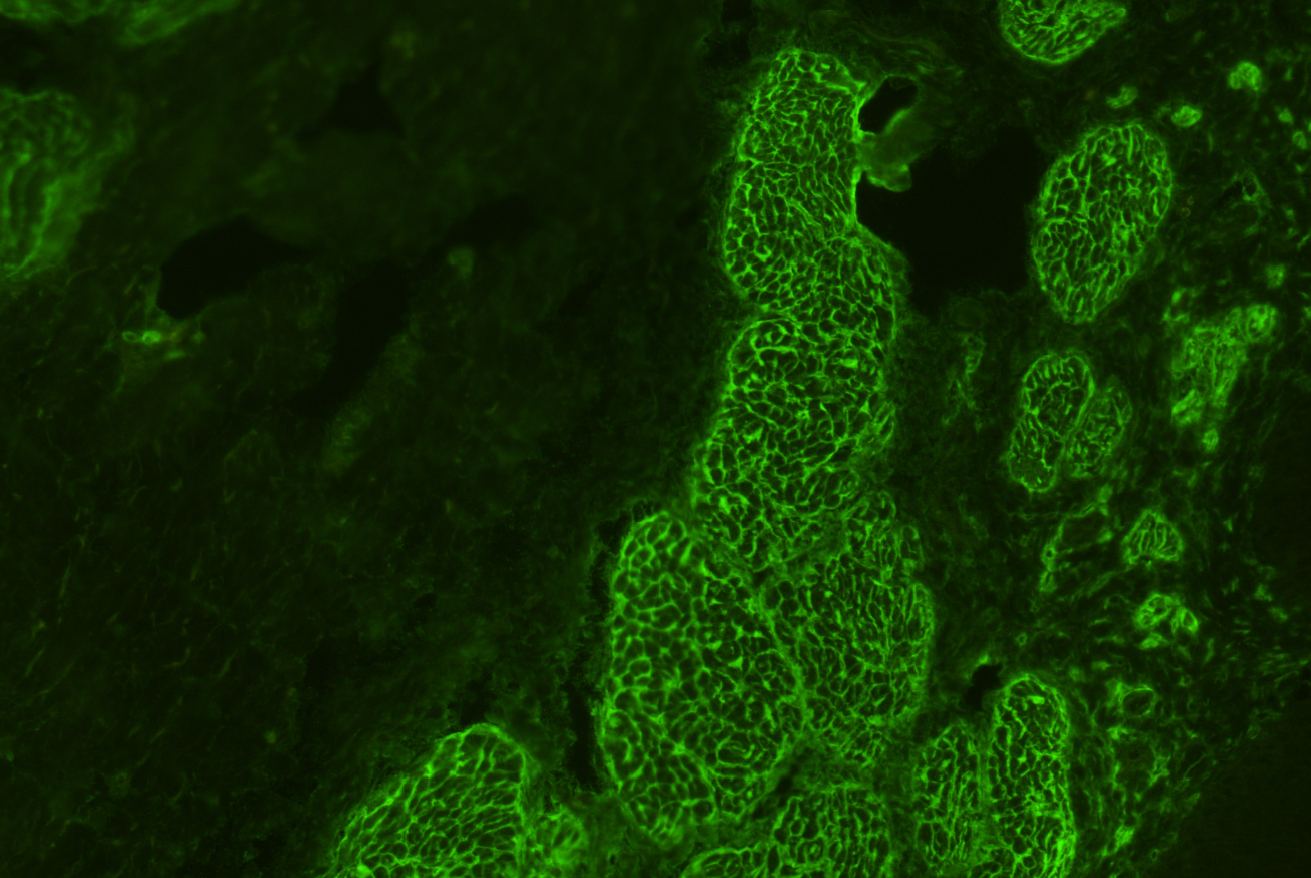
    Diagnosis of celiac disease typically involves a combination of clinical evaluation, serological tests, and histological examination. IgA tissue transglutaminase is the most efficient serological test for the diagnosis of celiac disease. Anti-tTG IgA levels correlate with the degree of intestinal damage, and values can fluctuate with disease activity. Anti-tTG tests can be used to support diagnosis in symptomatic individuals, to screen at-risk populations, or to monitor diet compliance in patients previously diagnosed with celiac disease.Antibodies directed against deamidated gliadin protein epitopes (DGP) bind to epitopes of deamidated gliadin fragments that are relevant for celiac disease pathogenesis. DGPs are formed by the action of tTG on native dietary gliadin.Anti-endomysium antibody (EMA) testing serves as a reliable confirmatory marker, supporting accurate diagnosis and effective patient management.
    Item 1

Knowledge & Science

No content available.

Tests for diagnosing Celiac Disease

Instruments for diagnosing Celiac Disease

References

a) Husby S, Koletzko S, Korponay-Szabó I, Kurppa K, Mearin ML, Ribes-Koninckx C, Shamir R, Troncone R, Auricchio R, Castillejo G, Christensen R, Dolinsek J, Gillett P, Hróbjartsson A, Koltai T, Maki M, Nielsen SM, Popp A, Størdal K, Werkstetter K, Wessels M. European Society Paediatric Gastroenterology, Hepatology and Nutrition Guidelines for Diagnosing Coeliac Disease 2020. J Pediatr Gastroenterol Nutr. 2020 Jan;70(1):141-156.

b) Catassi C, Verdu EF, Bai JC, Lionetti E. Coeliac disease. Lancet. 2022 Jun 25;399(10344):2413-2426.

c) Kondapalli AV, Walker MD. Celiac disease and bone. Arch Endocrinol Metab. 2022 Nov 11;66(5):756-764.

This section contains information intended for wide distribution and may therefore contain product details or information that is not available or valid in your country.

Please contact your local Sebia representative. Information intended for healthcare professionals.
Carefully read the instructions in the reagent package inserts and instrument manuals.