
Select Your Region

We noticed you visit this page from United States. Please select your preferred region to continue

skip to content

Country Selector

Based on your location

Europe

North America

Latin America

Asia-Pacific

Diabetes

Chronic Hyperglycemia Diagnosis.

Diabetes is a chronic disease defined by the presence of persistent hyperglycemia. It develops when the pancreas does not produce sufficient insulin or when the body cannot effectively use the insulin it produces. As a result, glucose accumulates in the bloodstream, leading to elevated blood glucose levels (hyperglycemia).

Published date: 3/8/2021 | Modified date: 6/9/2026

What is diabetes?

Diabetes is broadly classified into two main types:

  • Type 1 diabetes (formerly called insulin‑dependent or juvenile diabetes) is characterized by an absolute deficiency of insulin production.
  • Type 2 diabetes (previously known as non‑insulin‑dependent or adult‑onset diabetes) results from the body’s ineffective use of insulin. It is frequently associated with excess body weight and physical inactivity.

In addition, gestational diabetes (GDM) refers to elevated blood glucose levels first detected during pregnancy.

People living with diabetes face a higher risk of developing serious health complications. Persistently elevated blood glucose can lead to long‑term and potentially irreversible damage to the heart and blood vessels, eyes, kidneys, nerves, and oral health. Individuals with diabetes are also more susceptible to infections.

Overall, diabetes is a major cause of cardiovascular disease, vision loss, kidney failure, and lower‑limb amputation.

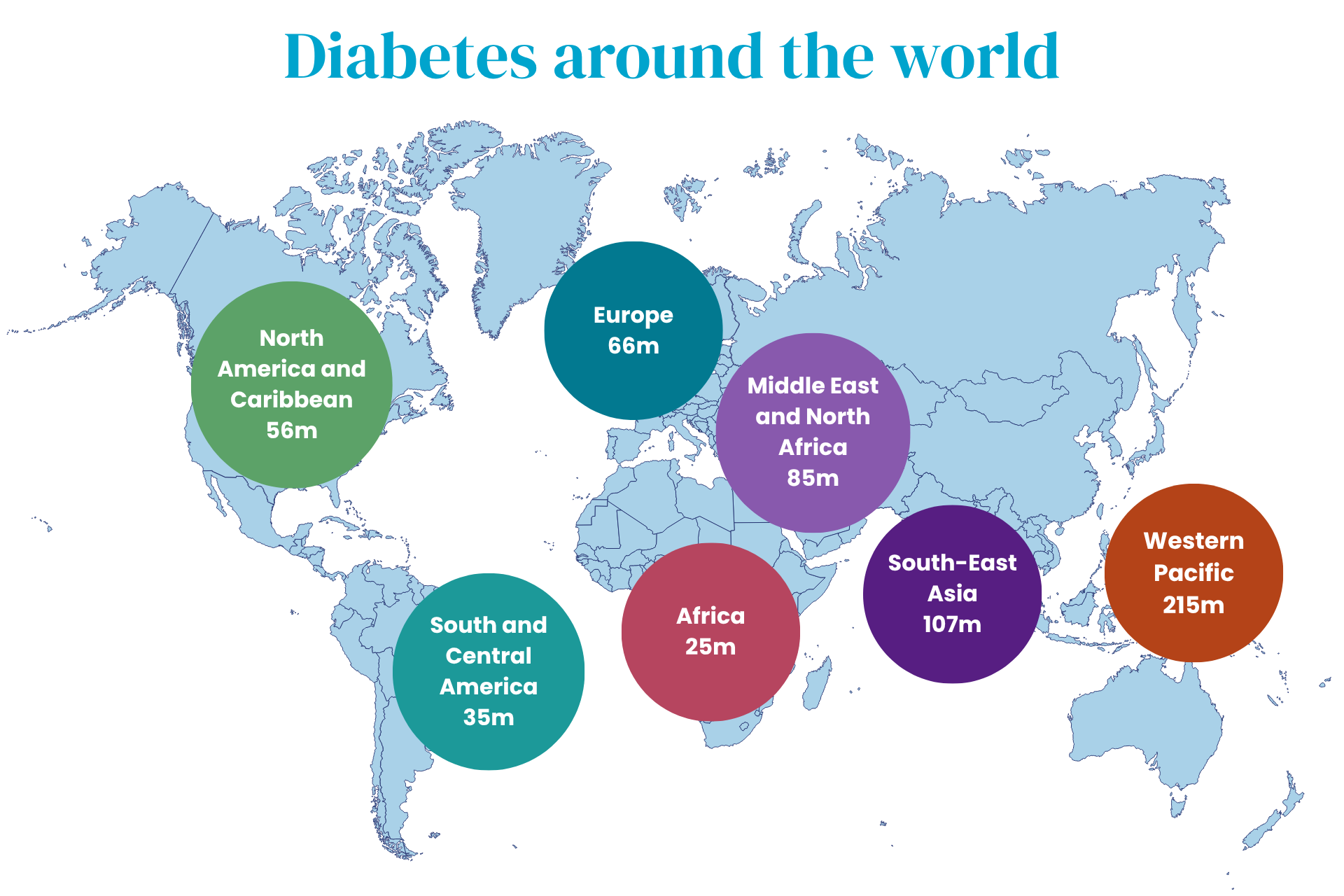
589 million adults (20-79 years) are living with diabetes – 1 in 9. This number is predicted to rise to 853 million by 2050

Diabetes is a major cause of early illness and death worldwide, and its prevalence continues to rise.

Key figures

  • 589 million

    adults (20-79 years) are living with diabetes

  • 853 million

    is the projected number of people with diabetes by 2050

  • 1/2

    adults having diabetes are undiagnosed

  • 3.4 million

    Diabetes was responsible for 3.4 million deaths in 2024

How do we diagnose diabetes?

  • Item 1

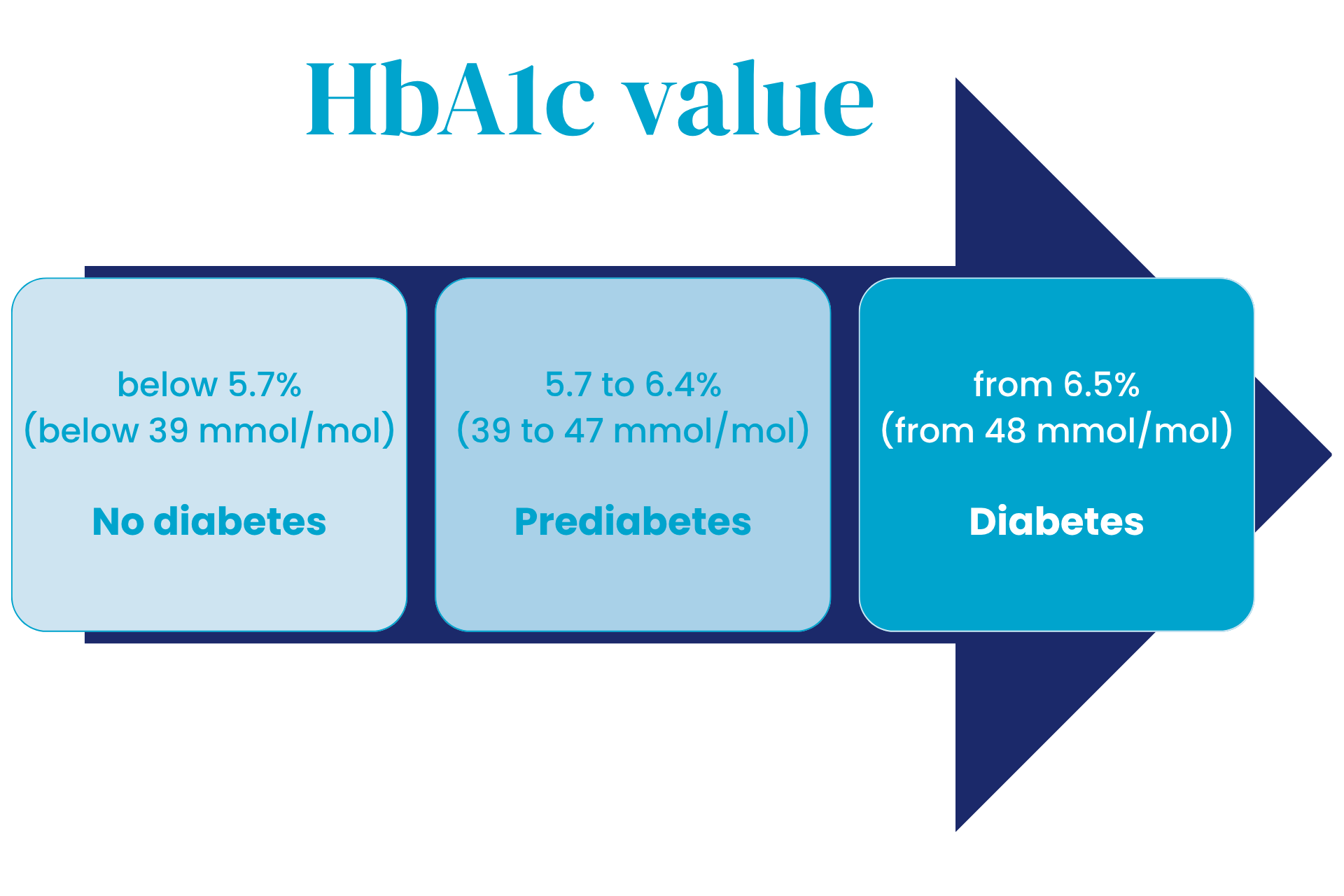
    Diabetes is diagnosed through blood glucose testing. This can be done by measuring glucose concentration using analytical methods such as Fasting Plasma Glucose (FPG) and the Oral Glucose Tolerance Test (OGTT), or by assessing the level of glycated hemoglobin (HbA1c) obtained from a whole‑blood sample. HbA1c is defined as hemoglobin A that has undergone irreversible glycation at one or both N‑terminal valine of the β‑chain. It is a widely used biomarker for diabetes management, offering greater pre‑analytical stability than glucose and not requiring the patient to fast before testing. HbA1c reflects long‑term glycemic control and helps assess the risk of developing diabetes‑related complications. Furthermore Hb A1c is a standardised parameter by the IFCC (International Federation of Clinical Chemistry) in harmony with the NGSP network

    Item 1

Knowledge & Science

No content available.

Tests for diagnosing Diabetes

Instruments for diagnosing Diabetes

This section contains information intended for wide distribution and may therefore contain product details or information that is not available or valid in your country.

Please contact your local Sebia representative. Information intended for healthcare professionals.
Carefully read the instructions in the reagent package inserts and instrument manuals.